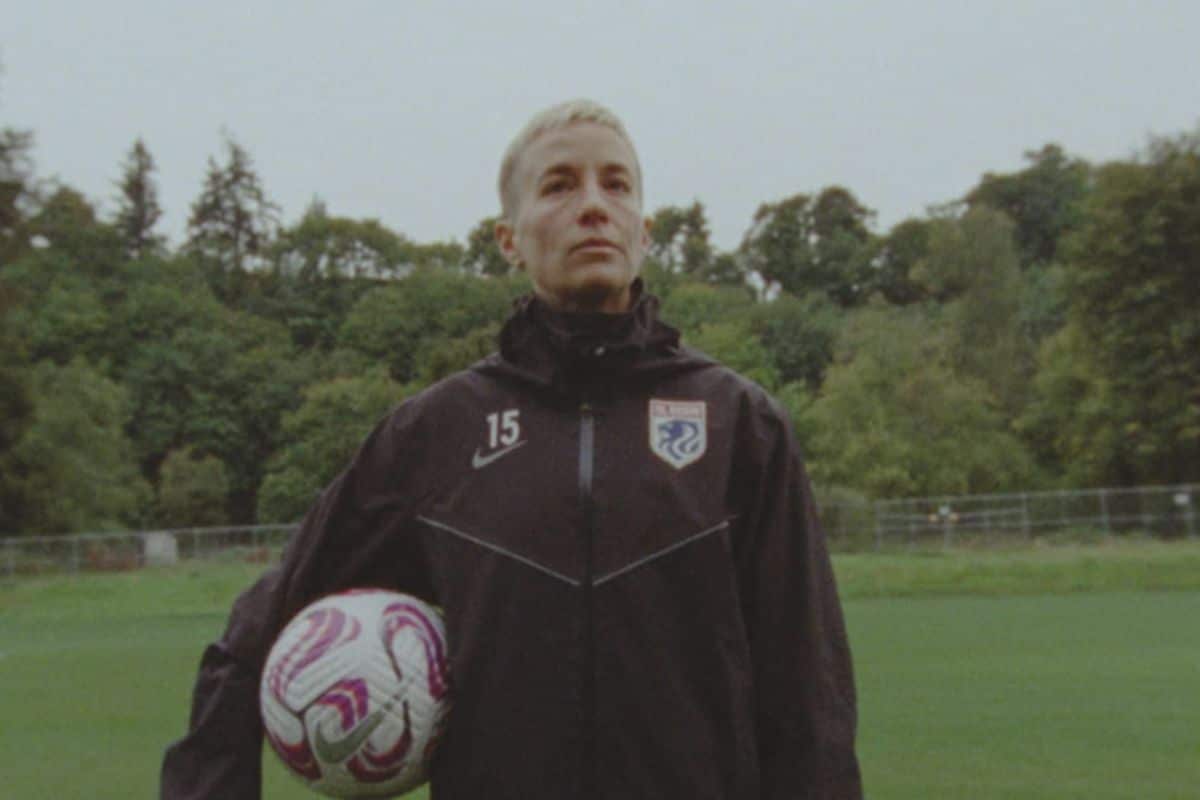
SHIFTER’s Chris Harrison calls Rebeca Huntt’s latest “one of the most engaging sports docs to come out in the last few years” in his Rapinoe film review.
“[Rapinoe] is one of the most engaging sports docs to come out in the last few years.” – Chris Harrison
It’s been getting harder and harder for me to get excited about new athlete documentaries. This new era of player-led sports media has been a positive in many ways, but many of the docs in this saturated market fail to address anything particularly interesting. In most cases, the athlete’s control over the narrative can dull the product, as access is traded for introspection, and the end result is little more than a branding exercise, a well-worn tale of haters silenced as on-field successes pile up. Beyond that, athlete after athlete has chased the highs of Michael Jordan’s The Last Dance series, either by not being as willing to put their flaws on display, or by simply lacking the requisite charisma.
Rapinoe, directed by Rebeca Huntt, is a breath of fresh air, powered by the charisma and introspection of its subject, American soccer star Megan Rapinoe, and the talents of its director, who understands that World Cup success isn’t nearly the most interesting thing about the star of the film.
The documentary feels intimate and up-close, shot on 16mm film, giving it a grainy, textured feel that’s particularly resonant during its quieter, more emotionally charged moments. And Rapinoe herself is a captivating interview subject, charming and witty in some moments, and steadfast in her moral convictions in others. The doc follows her life, starting with her humble beginnings in the small, conservative town of Redding, California as she found her love for soccer alongside her twin sister.
Some of the strongest moments in the film involve Rapinoe reflecting on her relationships with her family — how her and her sisters coming-out stories and soccer journeys differed, how her parents reacted to her coming out and to her outspoken approach to activism, and her relationship with her older brother and his run-ins with the law shaped her understanding of hot-button social issues. Here, Huntt sometimes deploys a unique visual touch, putting the interviewee and the person they’re talking about in split-screen, showing the audience the emotional weight of the conversation on both subjects’ faces at the same time.
In the doc, we see how the various pressures in her life, ranging from becoming a public target of Donald Trump’s ire, to being one of the faces of the equal pay movement in women’s sports, to being the first white athlete to support Colin Kaepernick’s anti-police brutality protests, affected her and her loved ones, with the resultant media firestorms juxtaposed against her plainspoken moral clarity.
It’s one of the most engaging sports docs to come out in the last few years, a fitting portrait of one of the most unique American athletes of her era.

Related content: