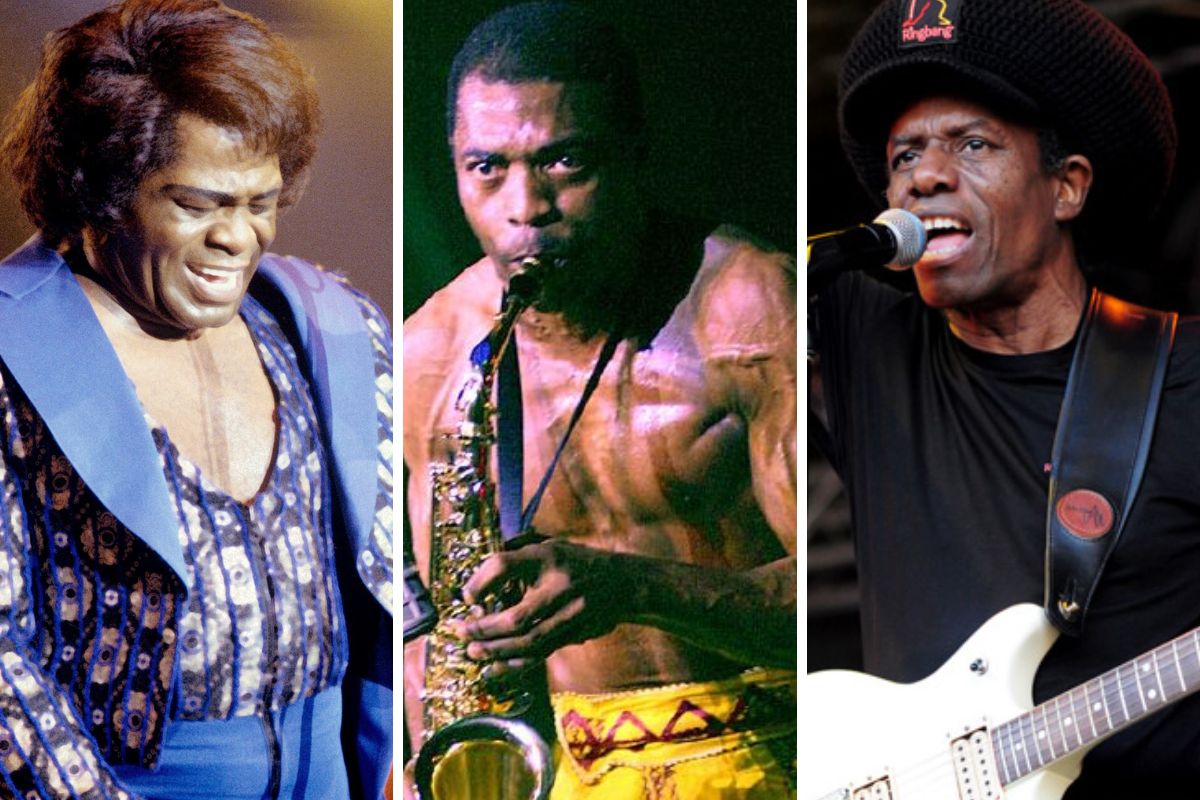
From the blues to hip-hop, Black artists have been forced to water down the message to be palatable to white audiences says Priscilla Wiredu.
“People still want to laugh and be entertained; they just don’t want the discomfort that comes with confronting the harm.”-Priscilla Wiredu
I was doomscrolling Reddit, my internet ‘second home’ and safe space from the real world, when I came across an old commercial from YTV about YOP! Yogurt drink. I wasn’t much of a yogurt drinker in my childhood, but the nostalgia was nice to listen to. Reading through the comments, I came across some interesting information: the song is a parody of Guyanese-British singer Eddy Grant’s 1998 anti-apartheid song, Gimme Hope Jo’anna.
Grant is no stranger to using his music to fight against injustices; his 1982 hit Electric Avenue was about the racial tension amongst Caribbean immigrants living in Britain, which was a global success (and still holds up to this day!). However, I also read some comments about how that YOP! parody was in poor taste; a song about political movements for human rights should not be taken lightly, especially for childlike entertainment and educational purposes.
I agree with such comments. However, I am not surprised that it was parodied.
Not because Grant’s song has a funny, upbeat, happy rhythm.
More so because one of the sole reasons why it became famous in the West (and was parodied) was because of its upbeat rhythm.
But to understand why, we have to zoom out, far beyond Grant, beyond the 1980s, and even beyond the American music industry.
Nothing New
Long before commercial radio and Billboard charts, Black music was already documenting the Black experience in its rawest form. In the 1800s, Black spirituals carried the coded language of survival, resistance, and hope among enslaved Africans. These songs were not meant to be palatable; they were meant to be necessary. As time progressed into the early 1900s, Blues and Soul emerged as sonic diaries of grief, migration, poverty, and resilience—unfiltered and emotionally heavy.
By the time we reach artists like Billie Holiday, that lineage becomes undeniable. In 1939, she debuted “Strange Fruit”, a haunting, melancholic piece addressing the lynching of Black people in the American South. It forced listeners into stillness—into discomfort. And for that very reason, it was blacklisted. The message was clear: Black pain, when presented without musical cushioning, was too much for mainstream audiences to bear.
That rejection did not stop the message, though it reshaped how it was delivered.

Packaging the Struggle
By the 1960s, during the height of the Civil Rights Movement, Black artists in the United States began blending protest with palatability. Music became both a tool of resistance and a product that had to survive in a commercial market.
Artists like Marvin Gaye with “What’s Going On” and James Brown with “Say It Loud – I’m Black and I’m Proud” created songs that carried heavy political messaging but wrapped them in groove, rhythm, and accessibility. Nina Simone, though often more direct and less commercially softened, was also central to this era, helping to define protest music as both art and activism.
This was adaptive, not accidental. The message had to travel, and rhythm became its vehicle.
“Across continents and generations, the pattern repeats: make it danceable, or risk being unheard.”-Priscilla Wiredu
Across the Diaspora
This phenomenon is not uniquely American. Across the African diaspora, Black artists have consistently embedded painful truths within vibrant, even celebratory, soundscapes.
Calypso music, for example, often associated with carnival and festivity in the Caribbean, has historically carried sharp political commentary beneath its playful exterior. Eddy Grant himself is part of that lineage—using bright, danceable production to critique apartheid and systemic racism.
In Africa, Fela Kuti revolutionized this approach through Afrobeat, merging infectious rhythms with unapologetically critical commentary on corruption, colonialism, and oppression. His music was vibrant, yes—but never empty.
Even in contemporary America, artists like Kendrick Lamar continue this tradition. His 2015 anthem “Alright” is sonically uplifting, almost celebratory. Yet its lyrics recount police brutality, systemic oppression, and exhaustion—turning hope into both a refrain and a resistance tactic.
Across continents and generations, the pattern repeats: make it danceable, or risk being unheard.

Palatability of Music
Western audiences have had a long-standing unconscious ‘guideline’ that Black musicians must follow in order to have their music heard; it must be palatable, easy to digest. There’s historic precedence in this: from minstrel shows with performers mocking their own struggles as slaves, subhumans, or “low-intelligent” people.
These shows created a standard where Blackness was only marketable if it was exaggerated, performative, and entertaining. To survive or to be heard, artists often felt forced to wrap their truths in humor, rhythm, or spectacle—turning pain into performance.
People still want to laugh and be entertained; they just don’t want the discomfort that comes with confronting the harm.
This creates a jarring paradox: the lyrics describe systemic oppression, violence, or generational trauma—but the melody must be catchy enough to hum along to during a morning commute. If the music is too dissonant, too angry, or too heavy, it is dismissed as “too political.” But wrap those same truths in rhythm, and suddenly, the world is ready to listen and dance.
“A truth that has to be coated in sugar is a truth that will never truly be digested.”-Priscilla Wiredu
Let Them Choke
The commercialization of “Gimme Hope Jo’anna” for a yogurt ad is a modern echo of a much older performance tradition: the minstrel show. The “mask” of joy protects the audience from discomfort while allowing them to consume the art without confronting its message.
The West says: Give us your rhythm, give us your soul, but don’t make us feel too much.
It is a trap of comfort. If the music isn’t “joyous,” it’s labeled “aggressive.” If it isn’t “catchy,” it’s labeled “unmarketable.” But the truth of the Black experience is not always a major chord or a danceable beat. It is often jagged, mournful, and loud.
To Black creators and audiences today: stop auditioning for comfort. Your history is not a jingle, and your pain does not need a beat to be valid.
Be abrasive. Be soft. Be silent. Be deafening.
Because a truth that has to be coated in sugar is a truth that will never truly be digested.

Related content: