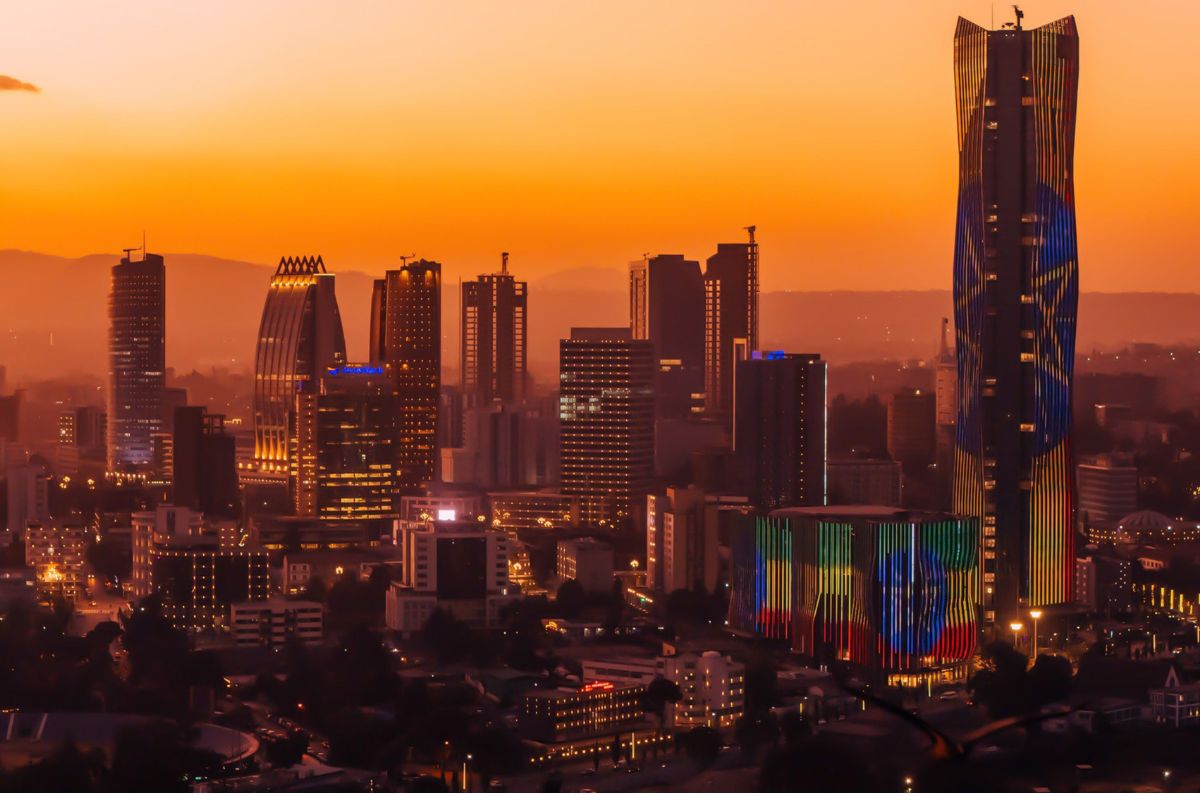
SHIFTER editor Kevin Bourne says the West owes Africa and the Caribbean more than just an apology; they owe reparations.
Growing up in the West (Canada to be exact), we grew up seeing Africa through a particular lens; even those of us who are of Caribbean heritage. We saw endless commercials stating that for the price of a cup of coffee we could sponsor a poor child with a swollen belly and flies buzzing around their head.
As Black people growing up in the West, our relationship with Africa was always complicated. We grew up in very Eurocentric societies and are steeped in Western culture, but in many ways, we still bear cultural similarities to Africa through our Caribbean ancestry. Still, many Caribbean people had negative perceptions of Africans.
The reality is that those depictions of Africa couldn’t be more wrong. In recent decades, with independence in the rearview mirror, Africa has been thriving despite still grappling with some serious setbacks.
With the mainstream Western media failing to report on the transformation underway in Africa, I took to YouTube and was surprised at what I was seeing.
The transformation
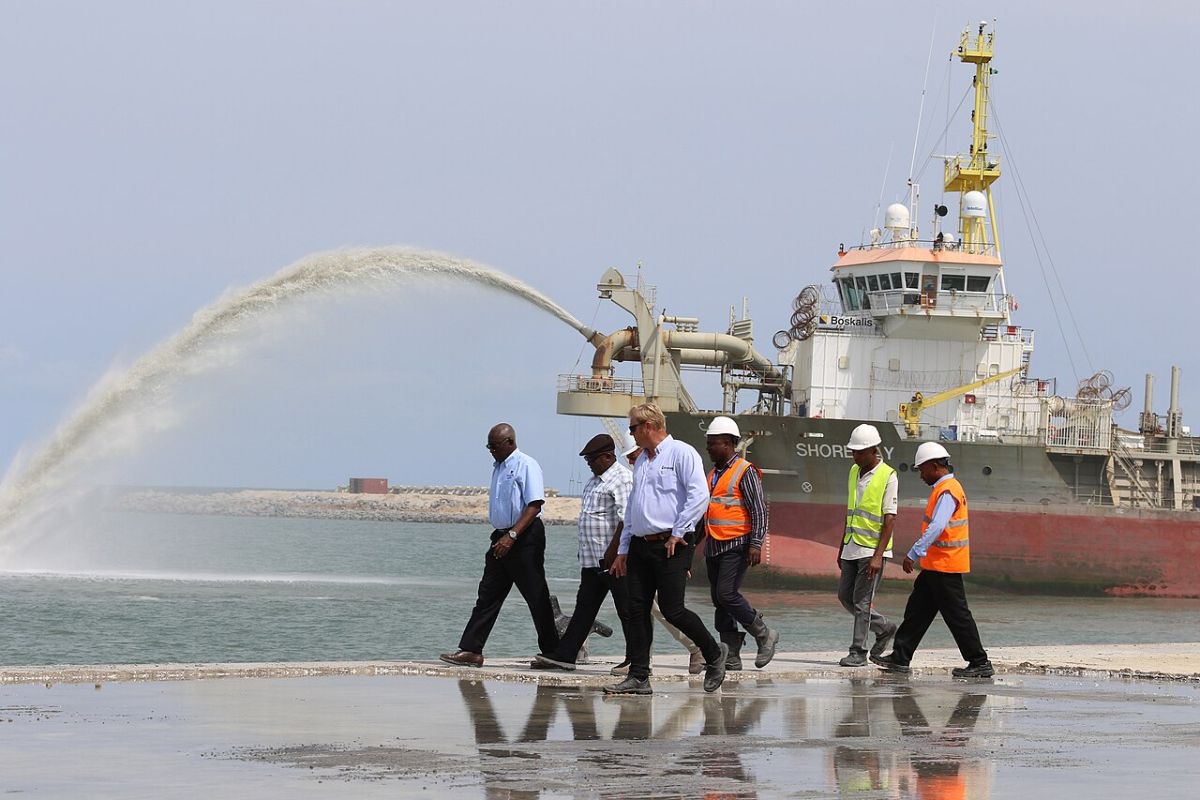
I saw the beauty and urban development of Casablanca, Morocco, and the aggressive urban renewal of Addis Ababa, the capital city of Ethiopia. There were rail projects in Nigeria. There were the growing skylines of Abidjan, in the Ivory Coast and Nairobi, Kenya. Rwanda, with its plans to become the Singapore of Africa. Of course, there was Africa’s growing footprint in arts & entertainment from Nollywood and the music industry in Nigeria. In commerce, there was the growing footprint of Nigeria’s Dangote group which made its first oil export to the United States in 2025. We can’t overlook Botswana’s investments in roads, highways, lighting, and education. Of course, there was Burkina Faso with the steady hand of Ibrahim Traoré who has drawn criticism from the West. Under his leadership, the country’s first national gold refinery and new roads have been built. The latter with the help of engaged citizens.
Looking ahead, there are big plans that will bring Africa into the future. There’s AI, which is attracting data centres, and investments from Google. Kenya with the recently announced $5.46 Billion Naivasha-Kisumu-Malaba Standard Gauge Railway and their Silicon Savannah tech hub, including a smart city, the Kenya Advanced Institute of Science and Technology and the under construction Riara University. All of this with the goal of becoming a first world country by 2055. Dangote recently bought a piece of Nigerian coastline to build the largest deep-sea port on the continent.
The most transformative project that has the potential to bring lasting prosperity to Africa is the African Continental Free Trade Area (AfCFTA) which aims to lower tariffs, harmonize trade regulations, and ease the movement of goods and services across the 54-member states. Intro-African trade is expected to increase by 52% by 2035, creating 30 million new jobs, and boosting incomes by $450 billion, or 7%. All this with the goal of decreasing dependence on external actors.1
In discovering the transformation underway in Africa, I felt a mix of pride and anger. Pride that the land of my ancestors is developing so quickly with all its ambitions, but shame that I allowed the Western media to inform my views of Africa for so long.
While there are still issues of corruption and violence on the continent, if you study the evolution of Asian countries like China, Singapore, and South Korea, it’s easy to see the trajectory Africa is on.
The threats
If you were to ask the West what the biggest threat to progress in Africa is, many would say it is the increased influence of China and Russia.
According to the China Africa Research Initiative at the Johns Hopkins School of International Studies2, In 2024, China’s Foreign Direct Investment (FDI) in Africa reached $3.37 billion USD. This is an increase of $320 million USD compared to two decades earlier, despite a 15% decrease from 2023. Meanwhile, American FDI in Africa decreased by $2.02 billion USD. According to the institute, a year prior, American FDI had surpassed that of China for the first time in a decade.
Russia’s influence in Africa involves military, security, the energy sector, and rail infrastructure. Meanwhile, Middle Eastern nations also have a growing influence in Africa. In 2023, 73 new FDI projects from the UAE, Saudi Arabia, and Qatar reached $53 billion, including expanding copper production in Zambia.3 Both the East and West are vying for economic opportunity and influence in Africa, and it looks like the East is winning.
All of these foreign and domestic investments in Africa have led to a projected economic growth of 4.1% in 2025, surpassing the global average.4
For comparison, real GDP in the United States increased by 2.2% in 2025 according to the Bureau of Economic Analysis5 while the European Union’s GDP increased by only 1.6%.6
But the only people to blame for Africa increasingly distancing itself from the West is the West itself. As if historical atrocities like colonization, the exploitation of resources, exploitative agreements and treaties that hindered African nations’ economic progress, and suspected involvement in military coups weren’t enough, ongoing travel visa barriers, including during the World Cup where Ghana led among countries that had their Canadian travel visas denied, and the U.S. President’s comments on Somalis,7 reveal that the West’s views on Africa have not changed. Many in the West place the blame on leaders who align with China and Russia when they need to take a look in the mirror.
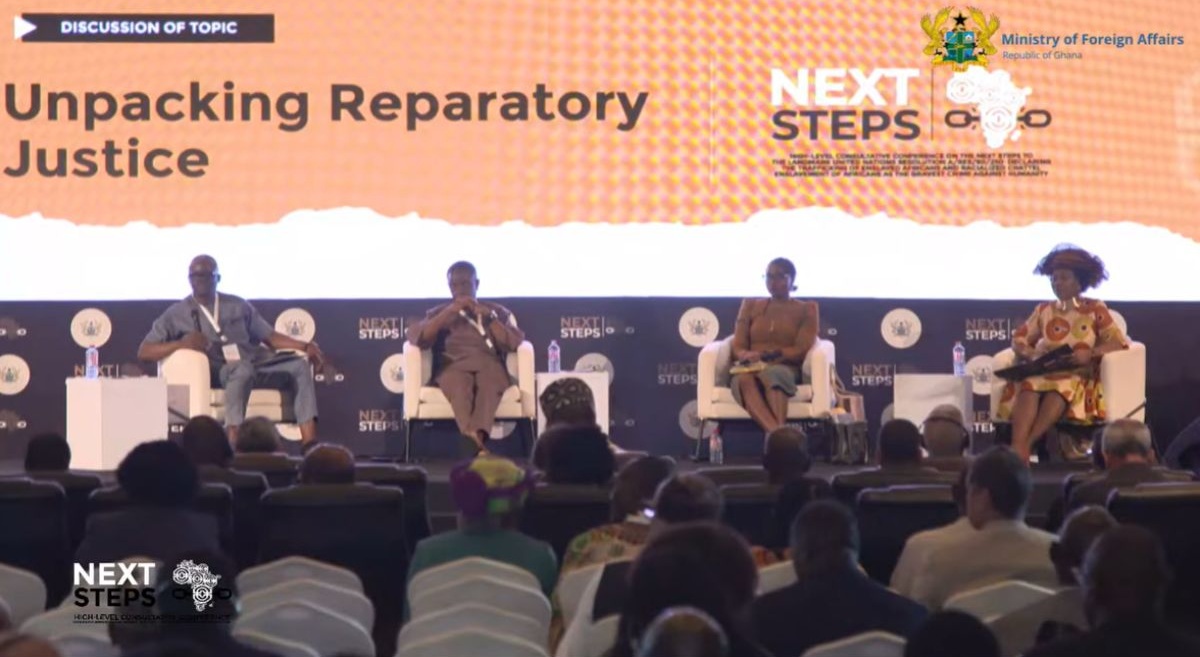
The West owes Africa an apology…and reparations. Alongside a slave trade reenactment, representatives from African and Caribbean nations recently gathered in Accra, Ghana to demand an apology and outline a 19-point framework for reparatory justice, aka reparations at the High-Level Consultative Conference on the Next Steps to the Landmark United Nations Resolution on the Trafficking of Enslaved Africans. These nations call on all state and non-state institutions who haven’t provided justice for the Trans-Atlantic slave trade to “offer full, formal and unconditional apologies as a foundational step towards reconciliation, trust-building and reparatory justice.”
This talk of reparations come as Jamaica and Barbados take steps towards drilling for oil, after the success of regional oil producers like Guyana and Trinidad.
With their educated workforces and increased flights between the two regions, relations between Africa and the Caribbean has never been more important.
The solution
The West has always seen Africa, as well as the Caribbean, as a people in need of saving; kind of like our Indigenous people here in North America – savage, poor, and unable to take care of themselves. There are paternalistic undertones that they somehow know better. Meanwhile, China takes the approach of a partner, albeit with economic interests.
What we need to ask ourselves is why Africa should trust us? What reason have we given them to have any confidence in us? If the West wants to truly change the tide in its relationship with Africa and stave off the influence of China and Russia, the ball is in our court and not that of Africa, especially since the past relationship has been an abusive and exploitative one, and not collaborative one. It’s not their responsibility to align with the West blindly, especially when there’s been no sign of change from past behaviours. Anything else would be insanity.
Kevin Bourne is a Toronto-based Barbadian-Canadian journalist and former Parliament Hill communications & policy staffer
1 https://au-afcfta.org/
https://www.africanexponent.com/top-10-geopolitical-trends-reshaping-africas-economies-2025/#4-gulf-states%E2%80%99-investment-surge
2 https://www.sais-cari.org/chinese-investment-in-africa#:~:text=Chinese%20annual%20FDI%20flows%20to%20Africa%20have%20increased,earlier%2C%20though%2015%25%20lower%20than%20the%20previous%20year
3 https://www.africanexponent.com/top-10-geopolitical-trends-reshaping-africas-economies-2025/#4-gulf-states%E2%80%99-investment-surge
https://www.mining.com/web/zambia-looks-to-uae-and-saudi-arabia-to-back-copper-expansion/
4 https://www.africanexponent.com/top-10-geopolitical-trends-reshaping-africas-economies-2025/#4-gulf-states%E2%80%99-investment-surge
5 https://www.bea.gov/news/2026/gdp-advance-estimate-4th-quarter-and-year-2025
6 https://www.mappr.co/eu-gdp-growth-rate/
7 https://www.cbc.ca/news/world/trump-somali-immigrants-9.7001275
Related content:
OPINION:WORKING TWICE AS HARD: BLACK ACTORS IN CANADA PUSH FOR RECOGNITION IN AN UNEVEN INDUSTRY